 Zethyn McKinley
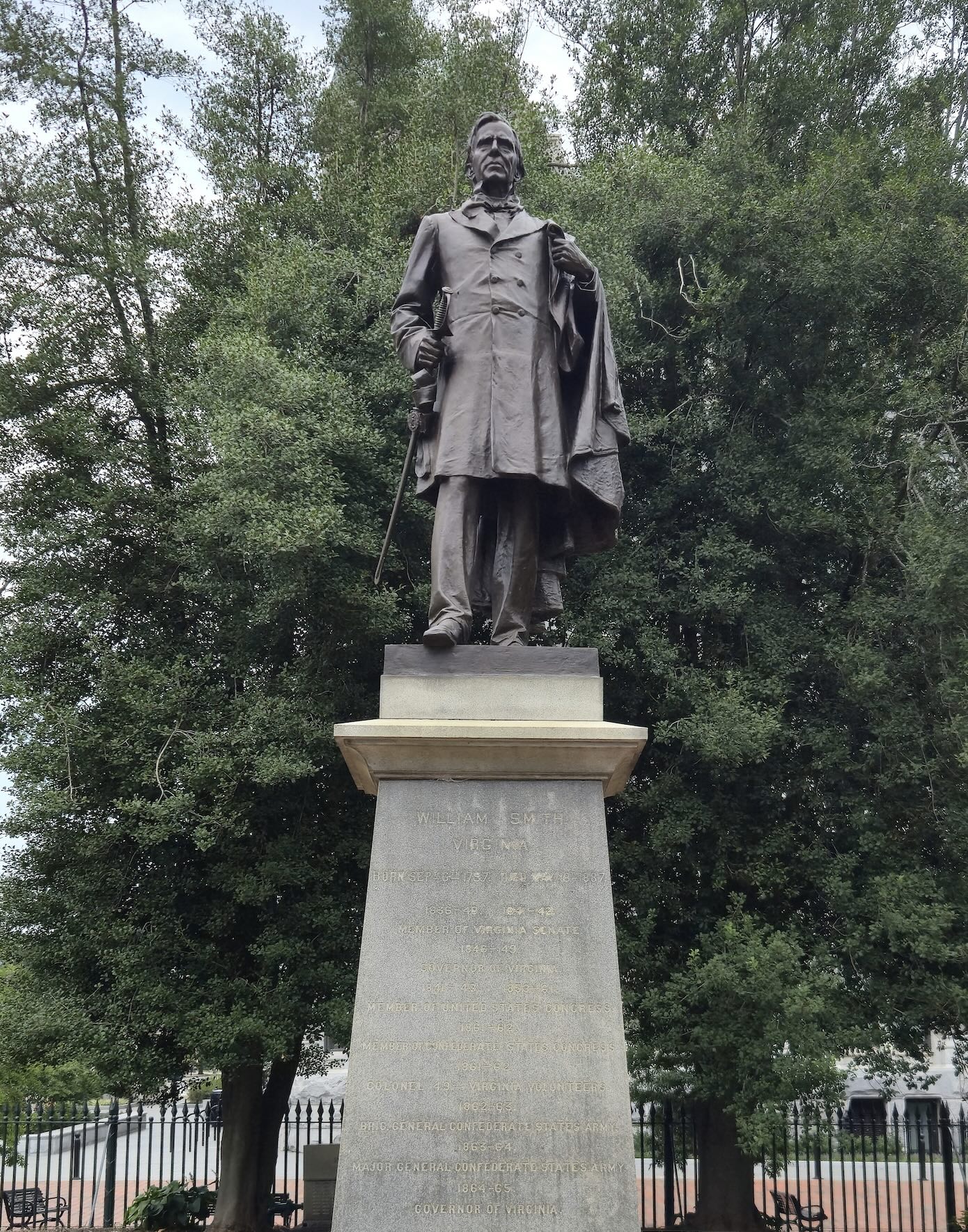
The monument to William “Extra Billy” Smith—one of three monuments recently located from Richmond’s Capitol Square.
During the COVID-era frenzy to remove Confederate monuments throughout the country, Richmond, Virginia, took down a significant portion of its sprawling open-air gallery. On the famed Monument Avenue alone, multiple prominent monuments were cleared away, including those commemorating Robert E. Lee, Stonewall Jackson, and Jefferson Davis. Other landmark removals followed, like a memorial in the Libby Hill district of Confederate soldiers and sailors and—again including Lee—from inside the Virginia State Capitol building.
I don’t want this post to devolve into a drawn-out debate on whether Confederate monuments should remain standing and where—readers can find plenty of discussion on that topic elsewhere in The Civil War Monitor. The intention of this series is to discover hidden bits of history and share them—like the fact that, amid the rush to remove Richmond’s monuments, three were left behind. And unlike the others that are now tucked away near Interstate 95 and the municipal sewage treatment plant, these Richmond statues were hiding entirely in plain sight—in the middle of a prominent, high-trafficked area.
The reason these three remained while others were removed is because they were located on state land—Capitol Square—and therefore not under the jurisdiction of the City of Richmond. In short, the commonwealth’s General Assembly, not the city, was responsible for deciding their fate.
In early August 2026, I visited these three remaining Confederate-related statues, which sat quietly among the everyday bustle of state government workers, lobbyists, and Virginia Commonwealth University doctors taking lunch breaks or sipping coffee. John Coski, long-time Richmond public historian at the Museum of the Confederacy—now The American Civil War Museum—recommended I visit them because ongoing legislative discussions meant their future in the square was in question. Two weeks later, August 28, crews moved in and they were gone.
My original hope was to highlight these monuments as pieces of “unhidden history”—commemorative objects effectively “hiding” in plain sight. Their removal forced me to pivot to another question: Where are they going, and why were they located in Capitol Square in the first place?
Statehood and Civic Legacy Over Confederate Status
Unlike the monuments to Confederate military figures along Monument Avenue, the statues in Capitol Square were erected to honor civic, professional, and statewide contributions to Virginia and beyond.
As Keven Walker, CEO of the Shenandoah Valley Battlefields Foundation (SVBF), told me during a recent conversation, these statues honor more than Confederate service. Dr. Hunter Holmes McGuire and Governor William “Extra Billy” Smith were memorialized for the totality of their careers and their massive impacts on the commonwealth:
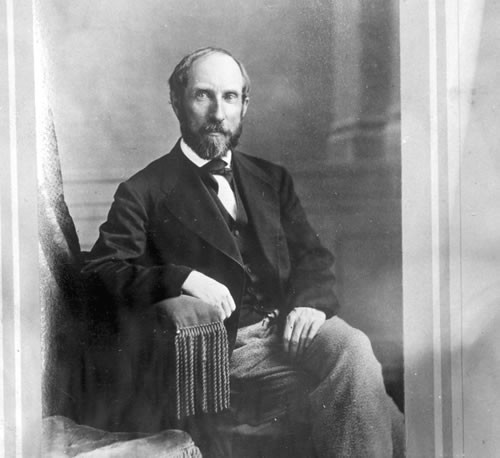
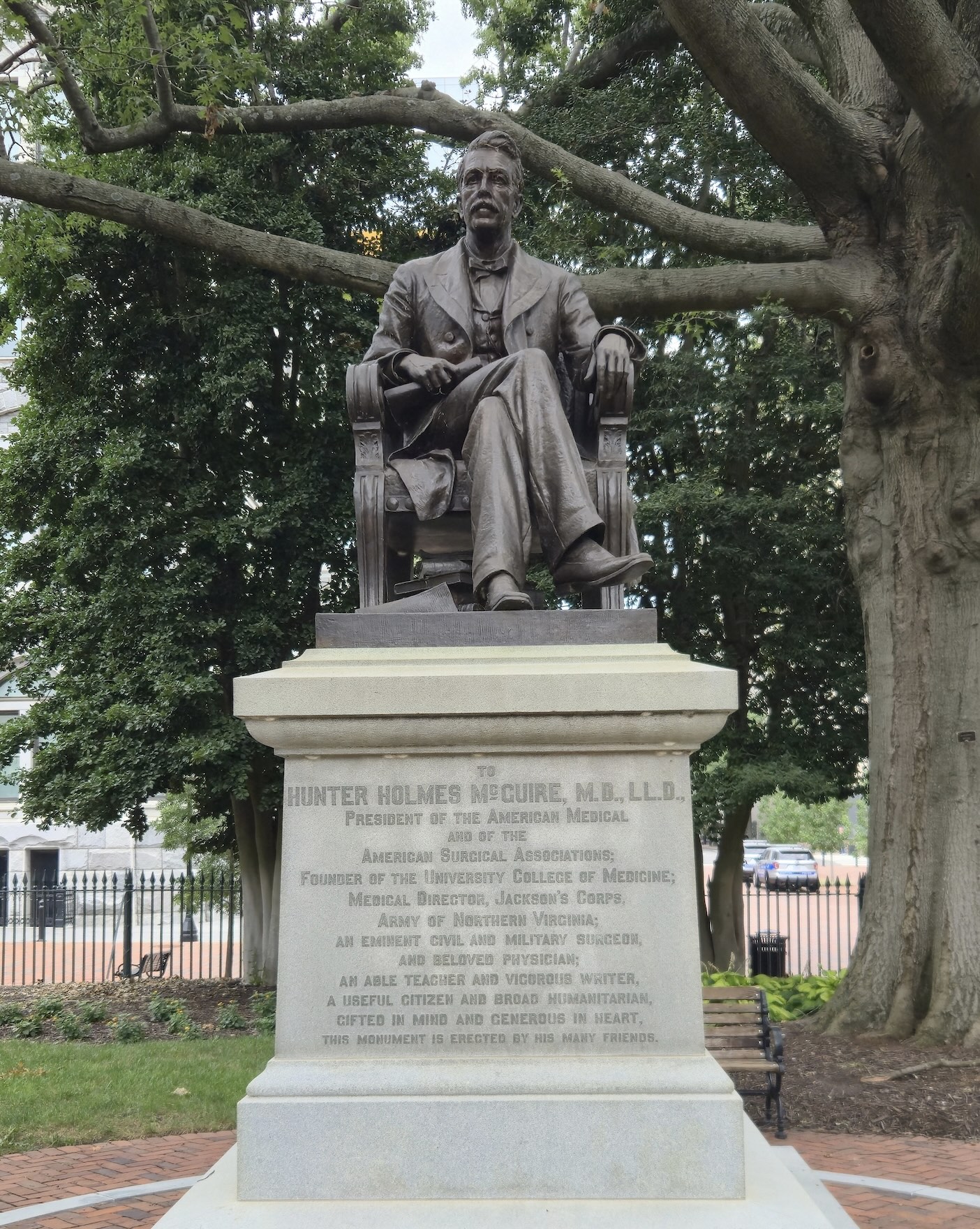
- Hunter Holmes McGuire: Though famously known as Stonewall Jackson’s medical director, McGuire’s monument depicts him in civilian attire with medical books under his seat. He was honored for his transformative role in medicine as a president of the American Medical Association and in Virginia’s healthcare infrastructure through founding medical schools in Richmond.
- William “Extra Billy” Smith: Smith was memorialized in formal civilian attire as a Virginia statesman, governor, and U.S. congressman. Already in his mid-sixties during the Civil War, Smith famously carried a blue umbrella into battle and served as governor-elect during the Battle of Third Winchester.
The Transatlantic Origin of Stonewall Jackson’s Statue
 Zethyn McKinley
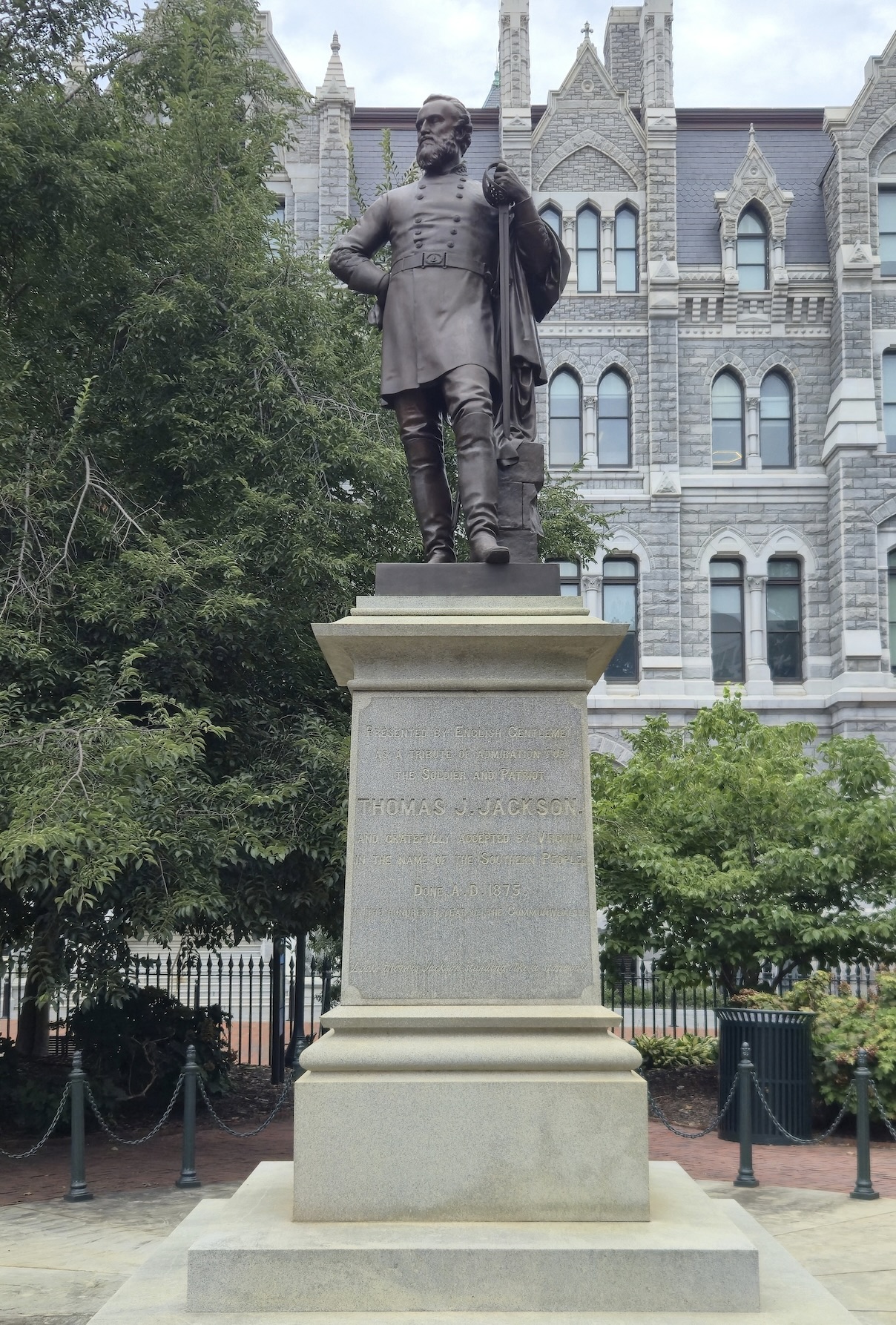
Thomas J. “Stonewall” Jackson’s Capital Square monument
The third of these statues is of Thomas J. “Stonewall” Jackson. While it is hard to escape the impact of Jackson’s military career on the creation of his monument, its establishment illustrates the broader impact his life had beyond the Confederacy. Jackson earned his fame on the battlefield before being mortally wounded by friendly fire at Chancellorsville and dying of pneumonia on May 10, 1863—fame that spread across the globe prior to the conclusion of the war.
In this vein, Jackson’s Capitol Square monument wasn’t commissioned by local Confederate veterans or regional mourners, but by a collective of “English gentlemen” admirers who started fundraising for it overseas just weeks after the general’s death and without aims to honor the Confederate cause. These British admirers viewed Jackson as a romantic, “American” David-and-Goliath figure portraying the ideals of southern tradition, faith, and bravery. Sculpted by Irish-born artist John Henry Foley, the bronze work was unveiled on October 26, 1875, before tens of thousands of onlookers.
In Governor James Lawson Kemper’s speech at Jackson’s unveiling, he stated that the monument was
not for the southern people only, but for every citizen of whatever section of the American republic…. Stonewall Jackson’s career of unconscious heroism will go down as an inspiration, teaching the power of courage and conscience and faith…. Let the spirit and design, with which we erect the memorial to-day, admonish our whole country that the actual reconciliation of states must come, and, so far as honorably in us lies, shall come; but that its work will never be complete until the equal honor and equal liberties of each section shall be acknowledged, vindicated, and maintained by both…. Let it [the statue] endure as a symbol of the respect which both the sections will accord to the illustrious dead of each…. Let it endure as a perpetual expression of that world-wide sympathy with true greatness which prompted so noble a gift from Great Britain to Virginia…. Let this statue stand, with its mute eloquence to inspire our children with patriotic fervor, and to maintain the prolific power of the commonwealth in bringing forth men of old.
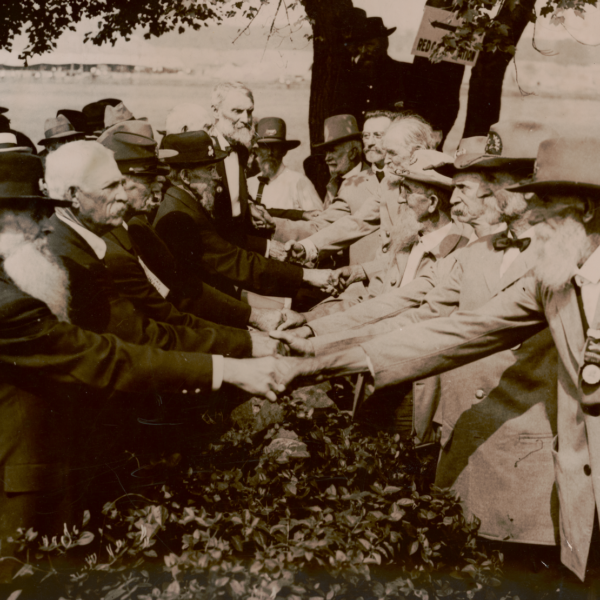
I was struck by Kemper’s attempt to use of Jackson’s monument as a symbol of reconciliation and mutual respect. Stripped of context, it is an undeniably powerful reflection of the goal of honor, not divisiveness. Yet despite Kemper’s stated intention, many then and now could not agree to separate the Confederate cause—and its lengthy postwar impact in the South—from its leaders, leading to the statue’s ultimate removal.
A New Home in the Shenandoah Valley
 Zethyn McKinley
The monument to Dr. Hunter Holmes McGuire at its old Capitol Square location
The removed Capitol Square monuments have been entrusted to the SVBF following a state budget provision signed by Governor Abigail Spanberger. The foundation, established by Congress in 1996 to manage historic sites in the Shenandoah Valley, is placing the statues directly into battlefield contexts tied to their lives:
- McGuire and Smith monuments: Both monuments have already been re-erected at the visitor center complex at the Third Winchester Battlefield Park, near where McGuire was born and Smith fought and convalesced.
- Stonewall Jackson monument: Jackson’s statue is being re-erected at the Cross Keys battlefield site, commemorating both the general and the pivotal 1862 Valley Campaign, with installation and educational signage scheduled to be completed ahead of the campaign’s anniversary in June 2027.
Upon assuming this role, the SVBF stated: “The Foundation takes this new stewardship responsibility very seriously and hopes to continue to partner with all involved to facilitate preservation solutions that protect these outdoor works of art, reflect the shared values of Virginians, and the voices of our times.”
Expanding the American Story
Re-erecting these monuments is part of a broader effort by the SVBF to present a complete historical landscape. Just yards away from where the McGuire and Smith statues now stand in Winchester, the foundation recently dedicated a new monument to Thomas Law, an enslaved man who acted as a spy and vegetable vendor across Union and Confederate lines. Law’s intelligence gathering directly enabled the Union victory at the Battle of Third Winchester in 1864, securing a critical victory prior to President Lincoln’s re-election that November.
As Walker emphasized, history serves as a primary unifying tool for the collective American story. Whether standing on a statehouse lawn or within a battlefield park, these physical markers remind us that while monuments may shift across the landscape, the ongoing work of uncovering and understanding our shared American past remains constant.
Zethyn McKinley is a freelance writer and editor with an interest in history, technology, and politics. Beyond her research and writing, she is a certified yoga teacher and blogger at 360 Yoga, where she shares insights on finding physical and mental balance. She resides in California’s Central Valley.