The Angry Politics of Confederate Heritage

11 comments | Posted: 1/3/2012 | Author: Andy Hall
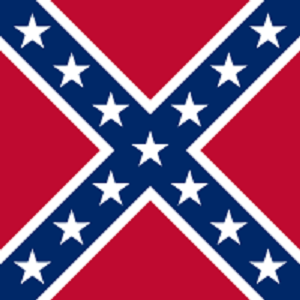
The Confederate Battle Flag

Presidential hopeful Newt Gingrich was recently at a campaign stop in South Carolina, where he fielded questions from the audience. One local resident took the microphone and asked him, “as an historian,” what was his position on flying the Confederate Battle Flag (CBF) on the grounds of the State House in Columbia. Gingrich’s response was pitch-perfect for his audience, simply saying it was a matter that should be left up to the states. The crowd, which had responded with some grumbling and booing at the audience member’s question, broke out into loud applause and cheers.

Gingrich’s answer struck exactly the right tone for an audience of South Carolina Republicans; any invocation of states’ rights is going to be a big applause line. Moreover, Gingrich was substantively right, as a matter of policy: it’s a question that needs to be sorted out among those in the community—in this case, the statewide community—without a lot of meddling by outsiders on either side of the issue. That principle holds equally true in Lexington, Virginia, and Summerville, South Carolina, as much as it does in Columbia. (The South Carolina GOP primary will be held on January 21, coincidentally Stonewall Jackson’s birthday.)

But Gingrich is running for office, and he did what pols are so very good at doing—he completely avoided making any statement about his personal view on the matter, or taking any position in support or opposition to the flag’s presence. As a both a southerner and an experienced political player, Gingrich surely knows that, one way or another, taking any specific stance on the flag, either in support or opposition, is a no-win proposition for anyone seeking national office. It’s a genuine political minefield that’s best left undisturbed, and Gingrich is doing his best to tiptoe past it, unscathed, on his path through the GOP primaries.

The former Speaker of the House is undoubtedly guided in his avoidance of the subject by watching other candidates get caught up in the inevitably divisive politics of the flag. His fellow GOP hopeful, Texas governor Rick Perry, weighed in not long ago on the contentious subject of specialty license plates promoting the Texas SCV, which included the group’s emblem, centered on a CBF. As governor, Perry has no direct say in the matter, but he does have considerable influence on the state’s Department of Transportation board. The board had previously split on approving the plate, but after Perry indicated he didn’t support it, the board voted the proposal down unanimously. The Texas SCV is following up with a lawsuit—which they will likely win—by citing, among other things, the Due Process Clause of the 14th Amendment to the U.S. Constitution, one of the “Reconstruction Amendments” passed immediately after the war. Irony is alive and well.

Perry’s actual statement about the proposed plate was relatively benign, telling reporters in Florida that “we don’t need to be opening old wounds.” Michael Givens, the C-in-C of the national SCV, gave a measured response, saying that “It's sad enough what Rick is doing. . . he's just playing politician.” Online, the reaction from Confederate heritage groups was far more inflamed, with one person accusing the candidate of being a “flip-flopping, back-stabbing, scalawag. . . . SHAME ON YOU, RICK PERRY FOR CAVING TO HATERS WHO WILL NEVER VOTE FOR YOU NO MATTER HOW MANY TIMES YOU LICK THEIR BOOTS!” Elsewhere on a Facebook group created specifically in response to Perry’s statement, one commenter was much more succinct: “rick perry is a trader” [sic., traitor].

What’s odd in this case is that anyone expected Perry to make a bold commitment to Confederate heritage in the first place. He’s never, to my knowledge, taken direct action in support of such a measure, or even spoken out strongly in support of heritage issues when he himself had direct say in the matter. Although he was endorsed by the secessionist League of the South in his 1998 bid for Texas lieutenant governor, as an SCV member Perry himself has long been silent on his membership with the group. (Just prior to his official announcement as a candidate for the presidency this summer, Perry’s spokesperson issued a statement that he had never “joined that group nor has he ever paid any dues to it,” which seems an oddly legalistic parsing of words.)

Perry’s supposed commitment to Confederate heritage comes from a statement he made in 2000 concerning two bronze plaques memorializing the Confederacy, which were ultimately removed from the Texas Supreme Court building. (The building had been constructed, in part, with funds left over from the state’s Confederate Widow’s Pension Fund.) When groups like the NAACP complained about the plaques, then-Governor George W. Bush initially supported keeping them in place, as did his lieutenant governor, Rick Perry. But Bush later reversed himself and the plaques were taken down. Perry succeeded to the governor’s office the following year, but more than a decade later, they remain in storage somewhere in Austin. Perry did, in the 1990s, sign a Texas Senate proclamation designating April as Confederate History and Heritage Month, but otherwise he’s never really done much to support Confederate heritage, and his “Confed cred” has always been more wishful thinking and projection than anything actually in evidence.

Other presidential candidates have stepped into this minefield, as well. In 2008, Mitt Romney said of the CBF in a CNN debate that “that’s not a flag I recognize,” and “this country can go beyond that kind of stuff.” John McCain, who in his 2000 campaign had called the CBF “offensive in many, many ways. . . a symbol of racism and slavery,” was compelled to reverse himself just three days later, saying, “I see the flag as a symbol of heritage.” Mike Huckabee, an early frontrunner for the GOP nomination in 2008, took the states’ rights position early on, adding that “if somebody came to Arkansas and told us what to do with our flag, we'd tell 'em what to do with the pole, that's what we’d do.” Liberals had a field day with the sheer crudity of that one.

But these candidates’ predicament, and the one Gingrich is studiously trying to avoid, is an old story that’s been repeated over and over again over the years. Confederate heritage groups, it seems, work hard to push elected officials into endorsing or espousing highly partisan positions on Confederate history, then express outrage at their “betrayal” when those same officials are compelled to back off from those same positions. In 2010, the Virginia SCV drafted a Confederate History Month proclamation that Governor Bob McDonnell rubber-stamped and issued. The original proclamation omitted mentioning certain elements of the conflict of the war—you know, like slavery—and McDonnell quickly issued a revision. The SCV was, in its own words, “terribly disappointed” in the governor’s action, and were even more upset later in the year when McDonnell announced a new commemoration, Civil War in Virginia Month, that encompassed a much wider range of Virginians, including enslaved and free African Americans, and even Union sympathizers. “Nobody’s ever been able to reason with me and tell me why we’re honoring Yankees in Virginia,” former Virginia SCV Commander Brag Bowling said of the new commemoration. “The only northerners in Virginia were the ones that came to Virginia and killed thousands of Virginia citizens when they invaded.” Okie-dokie, then.

But the ire of folks like Bowling doesn’t end when a pol leaves office; he and Richard Hines, a DC lobbyist and the SCV’s representative on Capitol Hill, went to the trouble a year ago of holding a formal press event to denounce both McDonnell and former Virginia governor George Allen (of “macaca” infamy), to pre-emptively scuttle the latter’s expected announcement that he would run for the U.S. Senate in 2012. The reason? In 2006, feeling stung by his long embrace of Confederate symbols, he claimed to have a better understanding of how the flag is seen by others, saying, "What I was slow to appreciate and wish I had understood much sooner," Allen told a black audience last month, "is that this symbol . . . is, for black Americans, an emblem of hate and terror, an emblem of intolerance and intimidation."

The list goes on and on. When Nikki Haley, the current Republican governor of South Carolina, was a candidate, she was subjected to a grilling by a local secessionist group, the Palmetto Patriots, on the importance and meaning of the flag. Haley Barbour, once considered a leading candidate for the 2012 presidential race, bowed out after making some foolish comments about the White Citizens Councils in the Mississippi of his youth; fairly or not, that fact that he had a Confederate flag, signed by Jefferson Davis, hanging in his office ended up getting prominent mention in subsequent news stories about him. Governor Roy Barnes, a Democrat who played a key role in changing the Georgia State Flag to an earlier form that, while recalling the Confederacy’s “First National,” removed the CBF originally placed there in 1962, likely lost his bid for reelection in 2002 in part as a result of that action. Republican governor David Beasley, who originally supported keeping the CBF on the State House in Columbia, South Carolina, but later ordered it moved to the Confederate monument on the grounds, where it remains today, was defeated in his re-election bid in 1998. Although there were likely several reasons for his defeat, the Confederate heritage movement sees it as a direct result of his actions with the flag.

Democrats are not entirely exempt from Confederate heritage dust-ups; Howard Dean, an early frontrunner for the 2004 Democratic nomination, stepped in it when he casually remarked, “I still want to be the candidate for guys with Confederate flags in their pickup trucks," seemingly equating that flag with Republican voting habits. The current president has continued a long tradition of sending a memorial wreath to the Confederate monument at Arlington National Cemetery, over the protests of a number of prominent Civil War historians and the ever-shrill anti-Confederate activist Ed Sebesta. But these disputes seem relatively minor compared to those that perenially stalk GOP candidates, because there’s no great expectation that Democrats are sympathetic to Confederate heritage. Conservative Republicans, by contrast, are frequently called upon to assert their bona fides in this area, and usually get themselves into trouble when they do.

I’d be surprised if many southerners are actually riled up about the Confederate flag one way or another, but as with all things Confederate, a relatively small group of folks make a lot of noise. The Confederate Battle Flag is often the focus of such disputes, which seem to serve little more purpose than to add more rancor and divisiveness to the mix. (As if present-day politics needs more of those things.) Confederate heritage advocates do their preferred candidates no great favors by pushing them to adopt positions that they will have to walk back or disavow later in the general election. It’s a common theme among Southrons about how this or that politician has “betrayed” them by reversing himself on some Confederate heritage issue, yet again and again they push candidates to stake out position that any reasonable person would see, they will ultimately be forced to abandon. What heritage advocates, like hard-core single-issue voters of all political persuasions, miss is that by demanding that the candidates toe the line on issues like this, they’re doing themselves more harm than good by forcing their candidates to adopt positions that simply don’t appeal to the general electorate.

 
Andy Hall is a Texan and Southerner by birth, residence and lineage, with a family tree full of butternuts. With a background in history, museum studies and marine archaeology, Hall also writes at his own blog, Dead Confederates.

 
Image Credit: Wikipedia.
Submit a Comment

Captcha code
Enter the code in the image to the left:

Comments

PaulW 1/3/2012 3:48 PM

I am of the opinion that either you support the American flag, to which we pledge, or not at all. The CBF is a flag of traitors and losers. And this is coming from a man who's lived his whole life in the South but lived it as an AMERICAN.

Reply
Captcha code
Enter the code in the image to the left:
andy.hall 1/3/2012 4:15 PM
Subscriber

Hey, Paul. The words "traitor" and "treason" don't click for me in the this context, for a number of reasons. I don't use them, generally.

The bigger question for me is why some people do seem to want fealty to Confederate heritage to be a litmus test for candidates, and why they forget that almost every time, such a commitment gets revoked or walked-back or parsed, resulting in "betrayal" and all sorts of other all-caps rants on Facebook.

Reply
Captcha code
Enter the code in the image to the left:
jimmiller/focusoninfinity 1/3/2012 10:09 PM

I have seven Confederate ancestors and am a member of the SCV. Had I a Union ancestor too, I'd want to be in the Union organization also. At my Google website, htts://site/gonetobeaconfederatesoldier\ , I list my CSA vet ancestors, but also list Union kin I'm very proud of. I did the paperwork, and submitted the paperwork for Capt. Charles Dearborn Copp's Medal of Honor stone, and payed circa $80 for it's inscription on the obverse, that he earned it at the Battle of Fredericksburg before Marye's Heights. It just arrived one day in the 1880's U.S. mail.

My ancestor, Capt. Alfred Alexander Miller, CSA, Co. K, 57th N.C. Troops was killed in that same battle. He does not have a U.S. government stone, but could have, had he needed it. This furnished by the enemy government he fought against. At one of our SCV meetings we agreed on a project to do the paperwork for CSA veteran stones from the U.S. government, should the graves be un-marked. I suggested should we find un-marked Union graves mixed with the CSA vets, we also do the paperwork for the Union graves. A semi-hostile: "Oh no!". Me: THE WAR'S OVER?

That's my background on this issue. To me it "depends"; depends how the CSA flag is used, and perhaps the intent behind it. I believe it is reasonable for a person of black heritage to prefer never to see the CSA flag. There are times I'd prefer not to see it used, such in a KKK contemporary hate contexts.

Privately proscribing, or prescribing the CSA flag use is one thing; governmental proscription or prescription of it's use, is another thing. With my seven CSA veteran heritage, I'm satisfied to see it flown officially on N.C. state government property just on Confederate Day, and when it is simply one of several flags that flew over N.C. historically.

Reply
Captcha code
Enter the code in the image to the left:
Andy Hall 1/4/2012 10:41 AM

The issue of how and when to display the CBF is not always an easy one, and it's often bound up in current politics more than it is in events of 1861-65.

The CBF at the Confederate monument in Columbia, South Carolina is a good case in point. As I understand, the monument historically never had a flag until the present pole was put up in 2000. That was done as a compromise move, after calls to remove it from its then-current place atop the South Carolina State House itself. But that was a relatively recent phenomenon, the flag having been put there by legislation in 1961 when it was widely used as a symbol of the "massive resistance" movement in the South against desegregation and the overturning of Jim Crow laws by the federal courts. Not by the Klan or other fringe groups, but by all sorts of supposedly upstanding and respectable white Southerners. I don't want to belabor the point, but the important takeaway here is to understand that the CBF has never existed in a vacuum -- not in the 1860s, not in the 1960s and not today -- and it has never been a purely apolitical symbol, no matter how much some folks might claim it to be so.

The other important point to understand about the (ongoing) South Carolina dispute is that those who argue for the preservation of the CBF at the monument or its return to the top of the State House, are themselves arguing for a historically-revisionist use of the CBF on the Capitol grounds. For roughly two-thirds of the 147-year period since the end of the war, there was no Confederate Battle Flag routinely flown there, and if they were serious about "restoring" the use of the flag there, it wouldn't be present in either place. Taking the long view, their position is not restoration of the CBF to the State House grounds, but demanding more CBF than has historically been the case.

In the end, though, this is something that the citizens of South Carolina need to sort out for themselves. I hope they do eventually come to a resolution that they can all live with, even if they don't particularly like it. Part of the price of living in a democracy is that while you always have a voice, you don't always get what you want.

Reply
Captcha code
Enter the code in the image to the left:
Michael Rodgers 1/5/2012 5:27 AM

Good article, Andy. You're on to something important here which may explain why "flip-flopper" is such a derisive term in Republican circles. Part of it is how data-driven redistricting, nowadays, makes districts safer for the incumbent in general elections but more dangerous for the incumbent in primary elections. Part of it is how the word "principle" has been corrupted -- or purified! -- so that it is divorced from reality. A politician's job is to represent all the people he or she represents and to do his or her best job as an elected official, not to thwart the will of the people by remaining beholden to some small group. We had some discussion about it here http://bradwarthen.com/?p=11512. Because politicians want to pander and to be liked by everybody, they put up with grilling by small supposedly influential groups. And they give in. These groups are tough; the Viet Cong didn't break McCain, but the SC-SCV (or some such group) did. But their breaking of him was short-lived, and he apologized sincerely and nobly:

"I made several mistakes in my campaign. I regret them, but I can live with their consequences because I believe them to have been simple errors in judgment and not an unprincipled act. Only once, I believe, did I act in an unprincipled way. But once is enough, and I want to tell the people of South Carolina and all Americans that I sincerely regret breaking my promise to always tell you the truth. . . .

My ancestors fought for the Confederacy, and I am sure that many, maybe all of them, fought with courage and with faith that they were serving a cause greater than themselves. But I don't believe their service, however distinguished, needs to be commemorated in a way that offends, that deeply hurts, people whose ancestors were once denied their freedom by my ancestors." http://www.nytimes.com/2000/04/20/us/excepts-from-mccain-s-remarks-on-confederate-flag.html

Reply
Captcha code
Enter the code in the image to the left:
andy.hall 1/5/2012 8:44 AM
Subscriber

Michael, thanks for commenting. The 2000 GOP primary campaign in South Carolina was brutal on John McCain, and possibly scarring personally. Race got mixed up in it, too -- IIRC that was where "Turdblossom"'s operatives put out the word that his dark-skinned daughter, an orphan adopted from Bangladesh, was actually a secret love child he'd had with an African American woman. Disgusting smear tactics, but they sank him. He was in full "maverick" mode in those days, gleefully goring various sacred cows of his party, (is that a mixed metaphor?) but the political machine broke him in the end for his heresies. He eventually won the presidential nomination in 2008, but he was hardly the same man, in my opinion.

Reply
Captcha code
Enter the code in the image to the left:
Greg 1/21/2012 12:33 AM

John said " My ancestors fought for the Confederacy, and I am sure that many, maybe all of them, fought with courage and with faith that they were serving a cause greater than themselves. But I don't believe their service, however distinguished, needs to be commemorated in a way that offends, that deeply hurts, people whose ancestors were once denied their freedom by my ancestors."

I'm confused ... is John saying that Northerners didn't own slaves??? I've never seen a credible source deny the existence of Northern slaves. In fact, a very cursory records review shows slavery ended in the South before it ended in the North.

Furthermore, is he saying that it's OK to deeply hurt and offend the descendants of slaves if your ancestors never denied anyone their freedom?

Reply
Captcha code
Enter the code in the image to the left:
Andy Hall 1/21/2012 11:35 PM

Greg, no one denies that there were slaves in the North. But they were very few. If you exclude the border states of Missouri, Kentucky and Maryland, the total slave population in ALL other northern states and U.S. territories at the time of the 1860 Census was around 1,800 -- smaller than the student population of many high schools today. Slaveholding was not unique to the states of the Confederacy, but it overwhelmingly a Southern phenomenon.

You also wrote, "a very cursory records review shows slavery ended in the South before it ended in the North."

That's a misleading statement. It's true that the Emancipation Proclamation applied only to those areas in rebellion, and left slavery in place in those states that did not secede. But the EP was a wartime measure, and even Lincoln did not believe he had the power, as President, to interfere with it areas that remained loyal, But the die was cast, and the 13th Amendment was passed by both houses of Congress even before the war ended. By early 1865, complete emancipation nationwide was in progress.

Reply
Captcha code
Enter the code in the image to the left:
Pat Young 3/4/2012 7:19 AM

"The SCV was, in its own words, “terribly disappointed” in the governor’s action, and were even more upset later in the year when McDonnell announced a new commemoration, Civil War in Virginia Month, that encompassed a much wider range of Virginians, including enslaved and free African Americans, and even Union sympathizers"

Wouldn't a commemoration "encompassing...African Americans" inevitably include "union sympathizers"?

Part of the reason slavery was written out of Civil War history was that any recognition that they make up a significant portion of "Southerners" leads to the conclusion that most "Southerners" opposed the confederacy.

Reply
Captcha code
Enter the code in the image to the left:
david7134 3/16/2012 2:07 PM

The flag has represented many things over the decades. Somehow it became associated with white supremacist, yet the American flag is equally represented with these groups. Blacks don't seem to understand the history or the flag or the Confederacy, that is one of the troubling aspects of the whole debate. In another respect, blacks can channel their anger to whites in general and promote a racist agenda of their own by unwarranted attacks on the Confederacy and the flag.

More people of the South are beginning to see that the stars and bars reflects a desire for freedom. This freedom was lost in 1865 and we see its continued erosion with each progressive president and administration. We also see that voting and the democratic process is less effective. We come to realize what our Southern ancestors were experiencing in the years prior to 1860 and appreciate the true reasons for desiring separation from those people and states that seek to impose their will on others through our tyrannical federal government.

Reply
Captcha code
Enter the code in the image to the left:
andy.hall 3/24/2012 3:37 PM
Subscriber

"More people of the South are beginning to see that the stars and bars reflects a desire for freedom."

That's yet another vision that people choose to see in the Confederate Battle Flag today, and that's fine. Symbols like the CBF can "mean" all sorts of things, based on an individual's experience.

The problem comes when people such as yourself choose a selective, narrow vision of what that symbol "means," while insisting that others who view it differently are simply ignorant. You're demanding the privilege of defining a symbol solely on your own preferred terms, while denying that option to others. You say, "blacks don't seem to understand the history or the flag or the Confederacy, that is one of the troubling aspects of the whole debate." I would argue that many African Americans see the meaning of the flag -- based on their own experience -- very well indeed.

I've often said that objections to the Confederate Battle Flag today have far less to do with how it was used in the 1860s, than with how it was used in the 1960s. It hasn't been that long ago that the "white supremacists" using the CBF as a symbol of intolerance and legal segregation were supposedly respectable people like students, veterans, housewives, and parents. It's a conceit of the modern Confederate heritage movement that the CBF was used only by fringe hate groups like the Klan or neo-nazi skinheads; in fact, not too long ago, the "white supremacists" of whom you speak could have easily been your parents, or mine.

This is not ancient history; unlike the Civil War, there are millions of people alive today in this country who lived through the civil rights struggles of the 1950s and 1960s, right down to the present. The Confederate Battle Flag stood for something to those people, too. Don't ever forget that.

Reply
Captcha code
Enter the code in the image to the left:

About This Blog

The Front Line is our communal blog featuring the latest in Civil War news, research, analysis, and events from a network of scholars.

For information concerning the blogs/bloggers, inquiries into becoming a blogger for The Front Line, events calendar requests, or general questions, please contact the Contributing Editor: 


Laura June Davis
laura@civilwarmonitor.com


Newsletter

Sign up here for regular email updates, including our free newsletter and special offers.

Blog Roll

Our Friends


Twitter


Facebook